
Technical articles and case studies
Public Cloud vs. Private Self-Hosted: Architecture and Data Sovereignty Guide for Enterprise PTT
A practical guide to Anetcall’s four-layer architecture, three deployment topologies (Public Cloud, Single-Site Private, Core + Regional Edge) and six enterprise security safeguards.

When organizations modernize from standalone two-way radios to an all-terminal real-time PTT and dispatch platform, the most consequential architectural choice is whether to launch on a managed Public Cloud Service or deploy a Private Self-Hosted platform inside enterprise infrastructure.
Based on real-world rollouts of Anetcall, this guide breaks down the architecture, topologies and security controls that shape that decision.
Four Clear Architectural Layers
- Unified Terminal Layer (L1): Connects 4G handheld radios, rugged Android devices, iPhones, Windows dispatch desks, browser tools and SIP desk phones under one shared directory.
- Regional Edge Access Layer (L2): Routes terminals to the nearest regional access node with weak-signal voice tuning and seamless reconnect recovery across wide areas.
- Core Communication & Intelligence Hub (L3): Handles sub-second PTT arbitration, emergency priority override, full-duplex calls, GIS geofencing, compliance archiving and server-governed AI voice.
- Dual-Edition & Security Foundation (L4): Runs the exact same unified software fabric as either a multi-tenant cloud service or a fully isolated private installation.
Comparing the Three Deployment Topologies
| Evaluation Factor | Public Cloud Service | Single-Site / Private Cloud | Core + Regional Edge Federation |
|---|---|---|---|
| Launch Speed | Minutes; zero servers to provision | Rapid deployment on customer hosts | Phased HQ + regional rollout |
| Infrastructure Overhead | Fully managed by WOTO | Lightweight IT maintenance | Central HQ governance, elastic scale |
| Data Custody | Isolated multi-tenant cloud | 100% customer premises / private cloud | 100% customer custody; central audit |
| Best Fit | Property teams, fleets, contractors, pilots | Campuses, ports, hospitals, plants | Multi-region groups, utilities, emergency |
Six Essential Security & Compliance Safeguards
- Managed Identity & Device Binding: Administrators control full account lifecycles and can bind accounts to approved hardware identities.
- End-to-End Encrypted Channels: Voice streams, messaging, GPS telemetry and administrative actions traverse encrypted links with minimized public exposure.
- Multi-Tier Feature Permissions: Delegate governance across subsidiaries and departments while toggling PTT, duplex calling, GIS, recording and AI per role.
- Searchable Recording & Audit Trails: Archive PTT audio, duplex voice and continuous terminal recordings alongside tamper-evident admin logs.
- Platform-Governed AI Boundaries: Model credentials and usage quotas remain strictly server-managed—never shipped inside mobile apps or field handsets.
- Isolated QR Visitor Call Points: External visitor calls stay strictly segregated from internal talkgroups and directories, with rate limits and one-click disable.
Integrating Legacy Two-Way Radios and Office PBX Systems
Organizations with existing Motorola MOTOTRBO or Hytera DMR repeaters and office IP-PBX desk phones do not need a rip-and-replace migration. The Anetcall Private Self-Hosted Edition bridges SIP desk phones and narrowband radio talkgroups directly into live cellular channels.
Reference materials: Download English Product Brochure (PDF) · Download Chinese Brochure (PDF) · Consult WOTO Engineers.
Related equipment
Anetcall Private Self-Hosted PTT Platform
Deploy the complete Anetcall real-time push-to-talk and dispatch platform inside your own servers, data center or private cloud with 100% data sovereignty—scaling from single-site setups to Core + Regional Edge federation.

Anetcall All-Terminal Real-Time PTT & Command Platform
Engineered by ShenZhen Woto Communication Co., Ltd., Anetcall unifies 4G industrial radios, Android handsets, iOS native apps, Windows Command Dispatch Consoles, browsers and zero-account QR visitor call points across Public Cloud and Private Self-Hosted models.
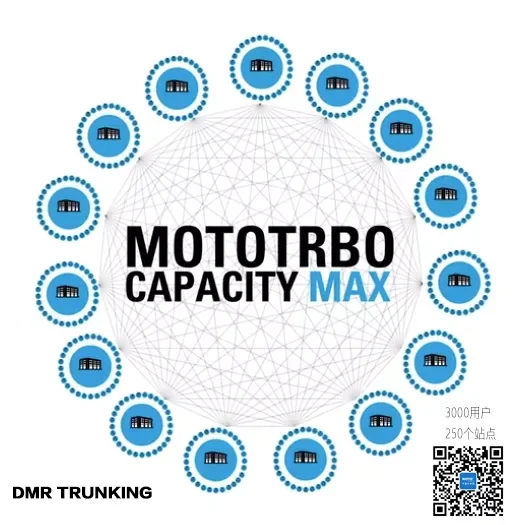
Motorola MOTOTRBO Capacity Max digital trunked system
A high-capacity, scalable MOTOTRBO digital trunked radio architecture supporting multi-site networking, centralised dispatch, redundancy and integrated voice and data for campuses, factories, utilities and enterprise networks.